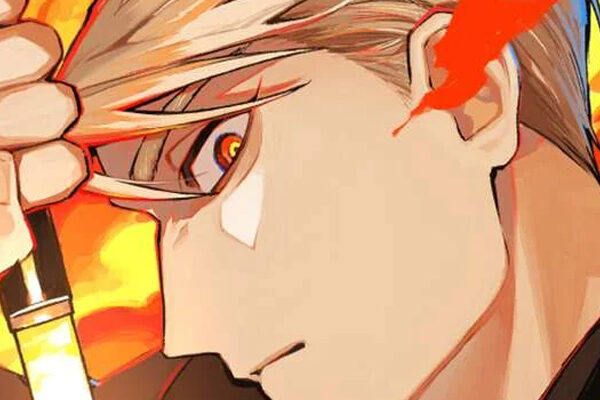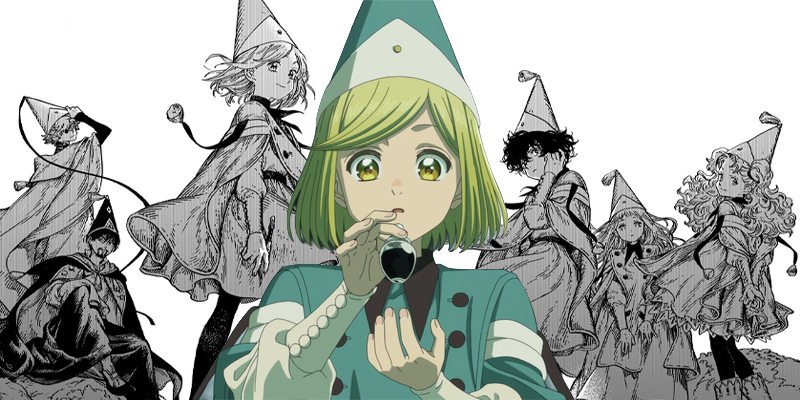
The Witch Hat Atelier anime adaptation during the Spring 2026 Anime Season completely won me over. Of course, that inevitably led to me stocking up on all 14 volumes of the manga, and then ploughing through the digital chapters on K MANGA to get fully caught up. Boy, am I glad I did! Because I love having my heart ripped out (and then stepped on,) and that’s exactly what Shirahama Kamome does with pretty much every chapter.
There is something magical and enchanting in Shirahama-sensei’s art. She vividly tells a story without words, which, in turn, serves to make every actual word that much more impactful. Witch Hat Atelier is magical and dark, with every beautiful panel capturing the radiant but twisted world main protagonist Coco exists in.
I am not writing reviews of the manga here, so much as I’d like to write a series of essays exploring my thoughts on the story and characters. I haven’t been writing here as much lately, due to work taking up a lot of my time, so, this is something I want to do for myself because Witch Hat Atelier has easily become one of my favorite manga series this year. The fact that one of the first things it reminded me of was one of my favorite video games of all time feels like the first thing to explore, so, let’s do this thing!
Witch Hat Atelier Is Everything I Love About Magic

Image via Kodansha
Magic has always been a huge fascination for me. Since I was a little girl, not unlike Coco, I daydreamed constantly about unlocking the magical secrets of the world. I wanted to fly and levitate objects, use my powers to help and heal, but more than anything, I wanted to feel empowered. Enduring bullying and abuse as a child, the very idea of magic being tangible and attainable was a constant glimmer of hope in a sometimes bleak existence.
If I had magic, no one could ever hurt me. And, if I’m honest, the thought of using magic to get revenge or lash out at abusers was not foreign to my developing brain. Those longings made it easy to get lost in epic tomes that explored such possibilities, and that same longing stuck with me into adulthood.
I was in my 20s when Harry Potter came out. As mom to a little wizard-in-training at the time, we read the books together and watched the movies,. As an adult, I thought extensively about how magical and dark Harry’s world was. Sadly, J.K. Rowling as a person made it hard for me to hold onto my love for the series, but that’s a whole other commentary for another day.
Now older (maybe not wiser, but… whatever,) I continue to find my heart aflutter in new magical worlds. Witch Hat Atelier has been a beautiful endeavor, so far. Combining all the right elements that have always brought excitement and joy to my world, Shirahama-sensei has a firm grasp on her vision, which makes following along for the ride completely effortless as a reader.
Magic Exists To Serve Man… (Where Have We Heard That Before?)

Image via Bug Films
Anyone who knows me is already fully aware of my deep love for the Dragon Age franchise. For those who don’t… there you have it. I’ve played every game numerous times, sinking thousands of hours into the rich world of Thedas and its darkspawn-encrusted depths. I’ve read the novels and short story collections, the comics… I’ve even written Dragon Age fanfiction in the past.
You could say I’ve been a bit obsessed over the years, and I’m not the least bit ashamed about it. So, what does that have to do with Witch Hat Atelier? No worries, I’m getting to that.
The approach Dragon Age takes to magic and its purpose within the world came to mind as soon as I got through the first couple of episodes of Witch Hat Atelier‘s anime. As the Chantry and the Templars are fond of reminding players, “Magic exists to serve man and never to rule over him.” Sadly, this philosophy, which was grounded in logic, led to oppression and horrors the likes of which dominate every piece of Dragon Age media ever made.
While not entirely the exact premise, Witch Hat Atelier‘s Pointed Caps do share similarities with Ferelden Chantry philosophy. The Knights Moralis who govern over the witches of Coco’s world are not unlike Dragon Age‘s Templars. Witches in their own right, the Knights Moralis work tirelessly to ensure magic isn’t abused, lines aren’t crossed, and there is never a return to the dark time when magic ran unchecked through the world.
Magical Control Is Not A New Concept In Fiction

Image property of BioWare
From the moment readers are first introduced to Witch Hat Atelier‘s magic system, it becomes abundantly clear that their philosophy, though understandable, is not without its flaws. Similarly, Dragon Age’s approach to control meant making unruly mages Tranquil. This involved severing their connection to the Fade and their ability to cast magic.
Even worse, Tranquil mages lost their ability to experience emotion. Little more than husks of the person they once were, the fact that they don’t even feel enough to care about what they lost is the most horrific part of the Chantry’s solution.
The introduction of Easthies and the Knights Moralis in Witch Hat Atelier is as exciting as it is terrifying. Carrying the responsibility of erasing the memories of those who come in contact with magical knowledge and truth, as well as those who abuse magic by Pointed Caps definition, he takes his work very seriously.
Never mind the fact that he’s entirely ready to wipe the mind of a little girl without questioning her first.
Easthies’ enthusiasm is an immediate allusion to what will most assuredly lead to problematic abuse of power later on. His determination to uphold the carefully constructed rules of witch society almost immediately reaffirm the position the series’ antagonistic Brimmed Caps take. This kind of control has the potential to tear society’s carefully constructed rules’ system asunder, as Dragon Age II fans witness when Hawke’s companion Anders blows up the Chantry.
Witch Hat Atelier’s Balance Of Power Is Horribly Skewed From The Start

Image property of K MANGA
It doesn’t take much time to learn as a reader that the magic of Witch Hat Atelier has infinite potential. Stunted by horrors and hardships of the path, the witches of the world divided into two opposing factions: the Pointed Caps and the Brimmed Caps. The Pointed Caps made it their mission to heavily regulate magic, to forbid the use of dark spells that would cause harm. The Brimmed Caps, villainized from the start, feel these regulations stifle magic’s true purpose, and they will stop at nothing to reveal the truth from the world.
As the Pointed Caps tout the philosophy that the purpose of magic is to make the everyday lives of common people easier, magic itself is not a gift they have any intention of fully sharing with the those same people. Leave it to the witches, it’s their job.
This quickly becomes problematic in early chapters when the secrecy that governs Pointed Cap society makes it almost impossible to actually help people. Witches are so worried someone might catch a glimpse of their secret, they waste precious casting time looking for a way to hide.
Hiding In Plain Sight Is Not The Only Way
People get hurt, maybe they even die, and that becomes a central focus in Witch Hat Atelier as the story progresses. In and of itself, this point is one of the Brimmed Caps’ greatest arguments about the Pointed Caps’ heavy handed rule over magic.
So many more people could be saved and protected if magic weren’t so closely guarded. That being said, their extremist approach isn’t the answer either. We saw how well that worked for the mages and templars of Dragon Age, so… where does that leave us?
At a crossroads leading to exploration in a future post! I have so much I want to explore and say, but I’ve definitely wandered pretty far in this post. I may even be close to rambling at this point, so, I need to step back and regroup for my next post. Know this will not be the last of my Witch Hat Atelier musings. It may not even be the last time I bring up Dragon Age, as I wonder if Shirahama-sensei loves those games, too.